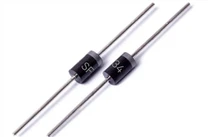
A diode looks like a small part on the PCB, but it often decides whether your power supply runs cool, your interface survives surge events, or your production line avoids repeated replacement trouble. If you are sourcing diodes for chargers, adapters, LED drivers, industrial controls, inverters, or protection boards, the real question is not only what a diode does. The better question is which diode can handle your voltage, current, switching speed, package limit, surge condition, and cost target at the same time.

A diode is a two-terminal semiconductor device that mainly allows current to flow in one direction and blocks it in the other. That simple behavior supports rectification, reverse-polarity protection, voltage clamping, signal switching, freewheeling, and high-voltage conversion. In real production, however, no diode is perfect. Forward voltage creates heat, reverse leakage affects standby loss, recovery speed changes switching noise, and package size limits thermal performance. When you choose a diode, you are really choosing a working margin.
How A Diode Works In Real Circuits
In the forward direction, a diode conducts after its forward voltage is reached. In the reverse direction, it blocks voltage until the reverse rating is exceeded. For a basic rectifier path, that behavior converts AC or pulsed current into one-way current. For protection circuits, the diode may stay inactive during normal operation and react only when a surge, ESD pulse, or reverse connection appears.
For production engineers and buyers, the important point is that diode behavior changes with temperature, waveform, frequency, and board layout. A diode that looks acceptable in a small test may run too hot in an enclosed power module. A diode with enough voltage rating may still fail when repeated surge current is ignored. A slow diode may pass DC checks but create heat and EMI problems in a switching power supply. That is why diode selection should start from the circuit position, not only from a part number.
Main Diode Types You Will Meet
A rectifier diode is used when you need stable one-way current flow in AC-DC conversion, DC blocking, or general power rectification. For standard power boards, you may compare axial and SMD options from a standard rectifier diode range.
A fast recovery diode is selected when switching speed matters. In SMPS, auxiliary windings, snubber paths, and freewheel circuits, recovery time affects loss and heat. If your board switches faster than a line-frequency supply, a fast recovery rectifier diode is often safer than a general rectifier.
A high voltage diode is used where blocking voltage is much higher than standard board-level designs. You will see these in power supplies, voltage multipliers, medical equipment, industrial modules, laser printers, microwave circuits, and special HV assemblies. For higher blocking requirements, you can review high voltage rectifier diode options.
A TVS diode is built for transient suppression. It protects sensitive circuits by clamping voltage spikes before they damage ICs, power inputs, or communication ports. If your product connects to cables, adapters, industrial wiring, USB, RS485, CAN, or outdoor power lines, you should consider a power supply TVS diode early in the design.
A switching diode is used for small-signal switching, logic paths, waveform shaping, and fast signal control. It is not a power rectifier. If your circuit needs low capacitance and fast response at small current, a part like a 1N4148 diode may be closer to the right family.
A bridge rectifier combines four diodes in one package. It simplifies full-wave rectification and saves assembly time. You may choose mini SMD bridge parts for compact boards or higher-current bridge rectifiers for power input sections.
Key Ratings To Check Before You Compare Price
Reverse voltage is the first filter, but it should not be the only one. You need enough repetitive peak reverse voltage, usually called VRRM, with margin above the highest circuit stress. For unstable mains, long cables, inductive loads, or surge environments, extra voltage margin is often cheaper than field failure.
Average forward current tells you the continuous current the diode can handle under specified thermal conditions. Read the datasheet conditions carefully. A current rating measured with long leads or ideal heat sinking may not match your PCB layout. Surge current matters when the diode sees inrush, capacitor charging, transformer startup, or fault pulses. Many diode failures happen during short events, not during steady operation.
Forward voltage affects heat. A lower VF can reduce power loss, especially in high-current rectifier paths. But you still need to balance VF with reverse voltage, recovery speed, leakage, cost, and availability. Reverse recovery time matters in switching circuits. If the diode turns off too slowly, it can create extra loss, ringing, heat, and EMI. In this case, choosing a faster diode is not a luxury. It protects the stability of the whole power stage.
Package and thermal resistance decide whether the datasheet rating can survive on your real board. DO-41, DO-15, DO-201AD, SMA, SMB, SMC, TO-220, and TO-247 packages all serve different assembly and heat paths. If you are replacing one package with another, check lead spacing, soldering profile, case temperature, and airflow.
How To Match A Diode To Your Application
For low-frequency AC-DC input, a standard rectifier or bridge rectifier may be enough. You should focus on reverse voltage, average current, surge current, and thermal rise. This is common in adapters, LED driver input stages, appliance boards, and auxiliary supplies.
For switching power supplies, speed becomes more important. A standard diode can waste power during reverse recovery. A fast recovery or ultrafast diode helps you control heat and switching noise. You should confirm frequency, waveform, peak current, duty cycle, and acceptable temperature rise before locking the BOM.
For PFC, inverter, and high-voltage converter circuits, diode stress can be severe. You may need a high-voltage fast recovery diode, ultrafast diode, or power package part with better thermal handling. In these designs, the wrong diode can affect efficiency, EMI, and long-term reliability.
For protection circuits, a TVS diode should be selected by working voltage, clamping voltage, peak pulse power, capacitance, package, and test standard. You should not choose TVS only by same voltage. The protected IC, line speed, connector position, and surge path all matter.
For signal switching, small capacitance and fast switching response are usually more important than high current. A switching diode should be chosen around signal level, leakage, capacitance, package, and switching time.
Common Diode Selection Mistakes
The first mistake is choosing by current and voltage only. Two diodes with the same 1A and 1000V rating can behave very differently in heat, surge, recovery speed, and package reliability.
The second mistake is ignoring temperature. If your diode works near its limit at room temperature, it may not survive inside an enclosed power supply or control cabinet. The third mistake is using a general rectifier in a fast switching path. It may pass basic power-on testing, but it can create high loss and unstable behavior during long operation.
The fourth mistake is replacing packages without checking thermal and mechanical fit. A smaller package may save space, but it can also raise junction temperature or reduce surge capability. The fifth mistake is buying only by the lowest unit price. If the diode causes rework, unstable supply, late delivery, or inconsistent batches, the real cost becomes much higher than the part price.
How To Work With A Diode Supplier
A useful supplier should help you narrow the selection, not just quote a random cross-reference. When you ask for diode support, share the circuit position, voltage range, current waveform, switching frequency, package preference, operating temperature, surge requirement, and expected order volume.
If you already have a part number, ask whether there are equal or better alternatives with stable supply. If you are designing a new board, ask for package options before PCB layout is fixed. If your application has high temperature, surge, or export requirements, make that clear early.
For production purchasing, you also need consistency. Ask about datasheets, packaging method, lead time, marking, quality control, and replacement support. A diode is small, but a shortage or unstable substitute can stop a whole product line.
Final Thoughts
A diode is not just a one-way current device. In real products, it controls rectification, protection, switching behavior, heat, and reliability. If you choose it only by a headline rating, you may miss the stress that actually damages the circuit.
When you select a diode, start with the application, then check voltage, current, surge, recovery speed, package, thermal margin, and supply stability. If you need help comparing rectifier diodes, fast recovery diodes, TVS diodes, high voltage diodes, or switching diodes, you can start from the product range at Electronic Diode and match the diode family to your real circuit conditions.
FAQ
What Is A Diode Used For?
A diode is used to control current direction, rectify AC into DC, protect circuits from reverse polarity, clamp voltage spikes, switch signals, and support freewheel paths in inductive loads. In B2B electronics, you will often see diodes in power supplies, LED drivers, chargers, control boards, communication ports, and high-voltage modules.
What Is The Difference Between A Rectifier Diode And A Switching Diode?
A rectifier diode is mainly built for power conversion and higher current flow. A switching diode is built for fast signal switching at smaller current. You should not replace one with the other only because the package looks similar. Check current, voltage, speed, capacitance, leakage, and circuit position first.
How Do I Choose The Right Diode Voltage Rating?
Choose a diode voltage rating above the highest reverse voltage the circuit can apply, then add margin for surge, unstable input, inductive ringing, and temperature. For mains input, high-voltage boards, or outdoor wiring, conservative voltage margin can reduce failure risk and make replacement sourcing easier.
When Should I Use A Fast Recovery Diode?
Use a fast recovery diode when the diode turns on and off repeatedly in a switching circuit. SMPS outputs, auxiliary windings, snubber circuits, inverter boards, and freewheel paths often need faster recovery. A slow diode in these positions can increase heat, switching loss, noise, and long-term stress.
What Does A TVS Diode Do?
A TVS diode protects circuits by clamping short voltage spikes. During normal operation, it usually remains inactive. When ESD, surge, or transient voltage appears, it conducts quickly and limits the voltage seen by sensitive components. Select it by working voltage, clamping voltage, pulse power, capacitance, and package.
Can One Diode Replace Another Diode?
Yes, but only after you compare the full electrical and mechanical requirements. Check reverse voltage, forward current, surge current, forward voltage, reverse recovery time, leakage, package, polarity, temperature range, and certification needs. A replacement that matches only voltage and current may still fail in production.