Product Detail
- Surge class: 400W.
- Packages: P4KE, SMAJ.
- Focus: compact boards.
- Use case: I/O ports.
Product Description
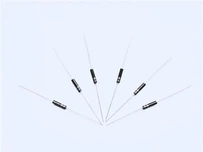
This 400W TVS diode page is for compact products where pulse energy is modest but the protected circuit still needs a defined clamp path. You can compare P4KE axial parts, SMAJ SMD parts and small package equivalents by working voltage, clamping voltage, capacitance, pulse rating, package height and assembly method. The 400W class often fits I/O ports, small DC rails and portable equipment where board space is limited. Lian Tuo helps you choose protection that is strong enough without pushing the design into a larger package family.
Our 400W TVS Diode Options
| P4KE 400W TVS Diode | Axial package for compact through-hole protection and simple repair stock requirements. |
| SMAJ 400W TVS Diode | SMD option for board-level surge protection with automated assembly and low height. |
| 400W Bidirectional TVS Diode | Choice for signal or AC-like lines where surge polarity can appear in both directions. |
| 400W Unidirectional TVS Diode | Direction for DC rails that need defined polarity and lower clamping behavior. |
| Compact 400W TVS Equivalent | Replacement path when package size, marking or lead time needs comparison. |
Feature Box
- Compact Power400W class protects modest surge paths in small boards.
- Package ChoiceP4KE and SMAJ options support different assembly needs.
- Clamp FitVoltage is matched to low-energy protected circuits.
- Port SupportUseful for I/O, small rails and portable devices.
Keep Protection Small
A 400W TVS diode is useful when a board needs surge protection but cannot spare space for a larger package. It should be chosen from expected pulse energy, normal working voltage and the protected circuit limit. Compact size works only when the surge requirement is realistic. It also helps avoid using a larger package than the board needs.
Choose P4KE Or SMAJ
P4KE axial parts suit through-hole boards and repair work, while SMAJ packages support automated SMD production. A 400W TVS diode replacement should match the assembly process before voltage details are finalized. Package fit prevents small protection jobs from becoming layout changes. That keeps the protection small without guessing at surge energy.
Check Signal Loading
I/O ports and portable equipment may care about capacitance as well as clamping voltage. A 400W TVS diode should not overload a signal line while trying to protect it. If the line carries data, mention speed and capacitance limits before sampling. It also helps avoid using a larger package than the board needs.
Avoid Overprotecting Blindly
A larger TVS part can handle more energy, but it may cost more, take more space and add capacitance. Lian Tuo can compare 400W TVS diode options against 600W or 1500W classes so your board gets enough protection without oversized parts. That keeps the protection small without guessing at surge energy.
Vertical Product Applications
I/O Port Protection
Use a 400W TVS diode at I/O ports when surge energy is modest and board space is tight. The part should match working voltage, capacitance and connector placement so protection does not disturb the signal. It also helps avoid using a larger package than the board needs. That keeps the protection small without guessing at surge energy.
Small DC Rails
Small DC rails need TVS parts that stay off during normal operation and clamp before downstream devices are damaged. A 400W TVS diode can fit low-energy rails when package and grounding path are reviewed early. That keeps the protection small without guessing at surge energy. It also helps avoid using a larger package than the board needs.
Portable Equipment
Portable equipment often needs compact surge protection near connectors or charging inputs. A 400W TVS diode helps save space while adding a defined clamp path. Confirm pulse requirement before choosing the smallest package. It also helps avoid using a larger package than the board needs. That keeps the protection small without guessing at surge energy.
FAQ
When should I choose a 400W TVS diode?
Choose it when expected pulse energy is modest and board space is limited. It is common for I/O ports, small DC rails and compact products where larger TVS packages are unnecessary. It also helps avoid using a larger package than the board needs.
Is P4KE a 400W TVS family?
Yes, P4KE is commonly associated with 400W axial TVS protection. You should still confirm working voltage, polarity, clamping voltage and package before using it as a replacement. That keeps the protection small without guessing at surge energy. It also helps avoid using a larger package than the board needs.
Can SMAJ replace P4KE?
Only if the board and assembly method support SMD replacement. SMAJ and P4KE differ in package style, mounting and heat path. Electrical ratings may overlap, but footprint approval is still required. It also helps avoid using a larger package than the board needs.
What is the difference between 400W and 600W TVS?
The main difference is pulse-power capability and often package direction. A 600W TVS can handle more surge energy, but may take more space or cost more. Choose based on surge requirement. That keeps the protection small without guessing at surge energy.
What data helps quote 400W TVS parts?
Send working voltage, polarity, package, pulse requirement, capacitance concern, target model and quantity. If replacing a part, include marking and board location near the protected line. It also helps avoid using a larger package than the board needs. That keeps the protection small without guessing at surge energy.
Can 400W TVS protect data lines?
Sometimes, but capacitance must be reviewed. Some data lines need low-capacitance ESD arrays instead. Tell us signal speed and line type before using a 400W TVS diode on communication paths. That keeps the protection small without guessing at surge energy.
Can Lian Tuo support 400W equivalents?
Yes. We can compare P4KE, SMAJ and compact 400W TVS diode equivalents by voltage, polarity, package and pulse rating before recommending samples. It also helps avoid using a larger package than the board needs. That keeps the protection small without guessing at surge energy.