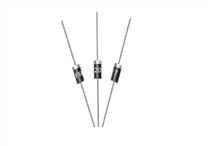
Having the right diode in these circuits is critical for stable operation, efficiency and lifetime reliability. Each of the various types of electronic applications calls for a specific type of diode, voltage rating, switching speed and package.
For this purpose, in this guide we will help you easily understand how you can choose the most appropriate diode for your project by following a simple step-by-step approach like industrial technical selection guides.
In this artical, the 6 common types of diodes will be introduced.
The first thing one needs to do before choosing a diode is to know the different types of diodes that are available in the market.
6 common types of diodes
1. Rectifier Diodes
Rectifier diodes are mainly used for converting AC power into DC power.
They are popular in:
·Power supplies
·Battery chargers
·Home appliances
·Industrial equipment
Typically, these diodes can carry large current.
2. Schottky Diodes
Schottky diodes are characterized by:
·Low forward voltage drop
·Fast switching speed
·High efficiency
They are used in the following:
·Switching power supplies
·Solar systems
·High-frequency circuits
3. Zener Diodes
Zener diodes have been specially engineered for voltage regulation.
They are used to maintain a stable voltage and to protect electronic circuits against over voltage.
4. TVS Diodes
A Transient Voltage Suppression (TVS) diode is used to provide protection for sensitive electronics from voltage transients.
They're commonly found in:
·Automotive electronics
·Industrial control systems
·Communication equipment
5. Fast Recovery Diodes
These diodes are designed to switch at high speeds.
Common applications include:
·Inverters
·Motor drives
·SMPS power supplies
6.Light Emitting Diodes (LEDs)
LED lights use electricity to produce visible light.
They are widely used in:
·Lighting systems
·Displays
·Automotive lighting
·Electronic indicators
To select the right diode follow this 5 step guide.
By carefully adhering to these steps, it becomes much easier to select the appropriate diode.
The first step is to understand the requirements for your circuit.
Prior to picking a diode, consider the requirements of the application.
You should consider:
·Voltage level
·Current load
·Switching frequency
·Operating temperature
·Protection requirements
For example:
Rectifier diodes are used to perform power rectification.
Schottky or fast recovery diodes are used in fast switching circuits.
As we know, voltage stabilisation is achieved by using Zener diodes.
If the wrong type of diode is used, the performance of the circuit may be unstable or the circuit may fail.
To check the Forward Current Rating
The forward current rating is the maximum current that the diode will allow.
If the current exceeds rated current, the diode could overheat and fail.
Always choose diode with a proper safety margin for reliable performance.
Compare Reverse Voltage Rating
One of the most important parameters is reverse voltage rating.
The diode should be able to handle the circuit's maximum reverse voltage.
Exceeding the diode rating with reverse voltage can cause permanent damage to the diode.
For industrial applications, higher voltage safety margins are usually recommended.
Consider Switching Speed
There is a need for different switching speeds for different circuits.
Standard Diodes
Suitable for:
·Low-frequency applications
·Basic rectification circuits
Fast Recovery Diodes
Better for:
·High-frequency switching
·Power inverters
·Switching power supplies
Schottky Diodes
Ideal for:
·Ultra-fast switching
·Low power loss
·High efficiency systems
Choosing the right switching speed can significantly enhance the performance of a circuit and its energy efficiency.
Choose The Appropriate Package Type
Package type affects:
·Heat dissipation
·PCB layout
·Installation method
·Current capacity
There are several types of diode packages, most common of them are:
·DO-41
·SMA
·SMB
·SMC
·TO-220
·SOD-123
For many industrial uses, bigger packages are needed to achieve greater thermal management.
Common Applications Of Diodes
In this section, the reader will learn about a few common applications of diodes.
Power Supply Systems
AC to DC conversions and power regulation are some of the common applications of diodes.
Automotive Electronics
Among the applications of diodes in modern vehicle are:
·ECU systems
·LED headlights
·Battery charging systems
·Electric vehicles
Solar Energy Systems
The diodes that are used in solar applications are used for:
·Reverse current protection
·Power conversion
·Energy efficiency improvement
Industrial Automation
Diodes are used in industrial equipment to:
·Motor drives
·Signal protection
·Power management
Consumer Electronics
Diodes are found in almost all electronic devices – such as:
·Smartphones
·TVs
·Computers
·Home appliances
Common Mistakes When Choosing Diodes
When selecting diodes, there are some common mistakes to avoid.
Ignoring Heat Dissipation
One of the most common failure causes for diodes is excessive heat.
Proper cooling and thermal design are extremely important.
Choosing Only Based On Price
The reliability and lifetime of low cost diodes could be poor.
The performance of the diodes is generally better in industrial grade diodes than in other diodes.
Incorrect Voltage Rating
Failure to use adequate reverse voltage rating could result in catastrophic failure of the diode.
The use of slow diodes in high speed circuits.Slow diodes in high speed circuits.
Normal diodes may not be suitable for high frequency switching circuits.
Diode Installation Tips
For reliable operation:
1.Check the polarity before installing
2.Maintain good soldering standards
3.Don't overheat the soldering iron during the soldering process.
4.Ensure adequate heat dissipation techniques are used.
5.Observe electrical manufacturer's instructions
The diode life and circuit stability are enhanced by its proper mounting.
What is the lifespan of Diodes?
Good diodes can have a long, long life.
They have a lifespan that is influenced by:
·Operating temperature
·Electrical stress
·Current load
·Environmental conditions
·Product quality
Industrial diodes can have extremely long service life when operating under the proper conditions.
Future Trends In Diode Technology
The technology of the modern diode is still on the road to becoming:
·Higher efficiency
·Faster switching
·Lower power consumption
·Better thermal performance
·Smaller package sizes
Next generation high-performance diode products are powered by the technology of wide bandgap semiconductors, including silicon carbide (SiC) and gallium nitride (GaN).
Conclusion
It is important to consider the diode's voltage rating, current capacity, switching speed, package type, and application environment before selecting the right diode.
Each electronic system has different demands for diodes, and the right diode to use will enhance reliability, efficiency and circuit longevity.
Diodes are still one of the most critical semiconductor devices in today's electronic world, whether they are in power supplies, automotive systems, industrial automation, renewable power generation, or consumer electronics.