


As a reliable supplier of 1N5819 Schottky diodes, I often receive inquiries from customers regarding various technical aspects of these components. One question that comes up quite frequently is about the reverse leakage current of 1N5819 in a humid environment. In this blog post, I'll delve into this topic, explaining what reverse leakage current is, how humidity affects it in the 1N5819, and why it matters for your applications.
Understanding Reverse Leakage Current
Before we discuss the impact of humidity, let's first understand what reverse leakage current is. In a diode, current can flow easily in one direction (forward bias) but is supposed to be blocked in the opposite direction (reverse bias). However, in reality, a small amount of current still manages to flow in the reverse direction. This is known as the reverse leakage current, denoted as $I_R$.
The reverse leakage current is a crucial parameter because it can affect the performance and efficiency of a circuit. In power applications, for example, excessive reverse leakage current can lead to power losses, increased heat generation, and reduced battery life. In signal processing circuits, it can introduce noise and affect the accuracy of the signals.
The 1N5819 Schottky Diode
The 1N5819 is a popular Schottky diode known for its low forward voltage drop and fast switching speed. These characteristics make it suitable for a wide range of applications, including power supplies, voltage clamping, and reverse polarity protection.
The datasheet of the 1N5819 specifies the typical reverse leakage current under certain standard conditions. For instance, at a reverse voltage of 20V and a temperature of 25°C, the maximum reverse leakage current is usually around 10μA. However, these values can change significantly under different operating conditions, especially in a humid environment.
Impact of Humidity on Reverse Leakage Current
Humidity can have a profound impact on the reverse leakage current of the 1N5819. When the diode is exposed to a humid environment, water molecules can accumulate on the surface of the device. These water molecules can act as a conductive medium, providing an additional path for current to flow in the reverse direction.
Moreover, humidity can also cause corrosion and oxidation of the metal contacts and semiconductor materials in the diode. This can lead to the formation of conductive paths within the device, further increasing the reverse leakage current. In some cases, the increase in reverse leakage current can be several orders of magnitude higher than the specified values in the datasheet.
The effect of humidity on the reverse leakage current is also temperature-dependent. As the temperature increases, the mobility of the water molecules and the rate of chemical reactions also increase, leading to a more significant increase in the reverse leakage current.
Measuring Reverse Leakage Current in a Humid Environment
To accurately measure the reverse leakage current of the 1N5819 in a humid environment, specialized test equipment and controlled test conditions are required. A precision current meter is used to measure the small reverse current, while a humidity chamber is used to control the humidity level.
During the test, the diode is placed in the humidity chamber, and the humidity level is gradually increased while monitoring the reverse leakage current. The test is usually conducted at different temperatures to study the combined effect of humidity and temperature on the reverse leakage current.
Comparison with Other Schottky Diodes
It's interesting to compare the reverse leakage current of the 1N5819 with other Schottky diodes in a humid environment. For example, the SR3100 and SR240 are also popular Schottky diodes with different voltage and current ratings.
In general, the reverse leakage current of these diodes also increases in a humid environment. However, the magnitude of the increase can vary depending on the device structure, packaging, and material properties. For instance, diodes with better moisture resistance packaging may have a lower increase in reverse leakage current compared to those with standard packaging.
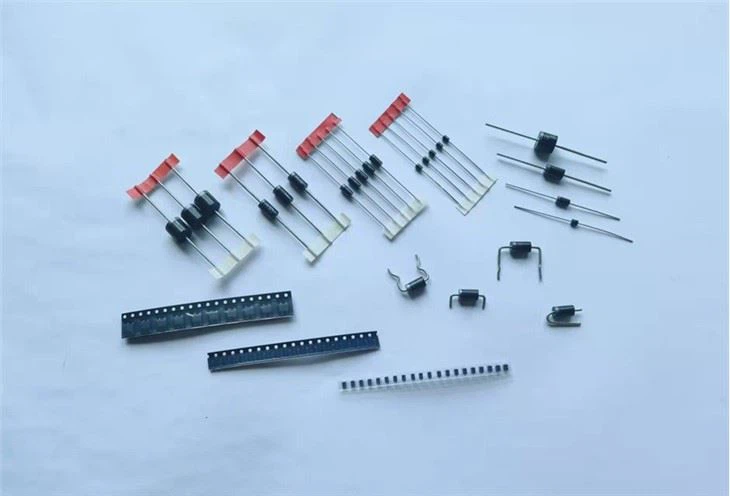

Mitigating the Effects of Humidity
If you're using the 1N5819 in a humid environment, there are several measures you can take to mitigate the effects of humidity on the reverse leakage current.
- Proper Packaging: Choose diodes with moisture-resistant packaging, such as hermetically sealed packages or packages with a protective coating. This can prevent water molecules from reaching the surface of the device.
- Environmental Control: Use enclosures or cabinets with humidity control systems to maintain a low humidity level around the diodes. This can significantly reduce the impact of humidity on the reverse leakage current.
- Regular Inspection and Maintenance: Regularly inspect the diodes for signs of corrosion or damage. Replace any damaged diodes promptly to ensure the proper functioning of the circuit.
Why It Matters for Your Applications
The increase in reverse leakage current in a humid environment can have a significant impact on the performance and reliability of your applications. In power supply circuits, for example, the increased power losses due to the higher reverse leakage current can lead to reduced efficiency and increased heat generation. This can shorten the lifespan of the components and increase the risk of system failures.
In signal processing circuits, the additional noise introduced by the increased reverse leakage current can affect the accuracy and integrity of the signals. This can lead to errors in data processing and communication.
Contact Us for Your 1N5819 Needs
As a trusted supplier of 1N5819 Schottky diodes, we understand the importance of providing high-quality components that meet your specific requirements. Whether you're looking for diodes with low reverse leakage current in a humid environment or need technical support for your applications, we're here to help.
If you're interested in purchasing 1N5819 diodes or have any questions about our products, please feel free to contact us. We'll be happy to assist you with your procurement and provide you with the best solutions for your projects.
References
- Manufacturer's datasheet of 1N5819 Schottky diode.
- Technical literature on the effects of humidity on semiconductor devices.
- Research papers on the performance of Schottky diodes in different environmental conditions.