


Hey there! I'm a supplier of ABSR10, and today I wanna have a chat about a question that often pops up: Does ABSR10 generate electromagnetic interference?
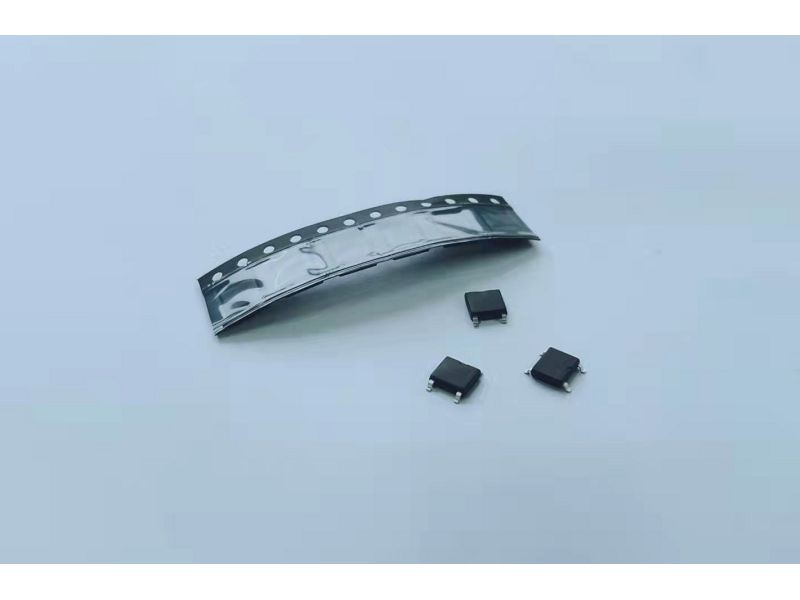
Let's start by getting to know what ABSR10 is. ABSR10 is a fast - recovery bridge rectifier, and you can find more details about it ABSR10. It's a pretty handy component used in a wide range of electronic devices, from power supplies to various control circuits. It's designed to convert alternating current (AC) into direct current (DC), which is crucial for the proper functioning of many electrical systems.

Now, onto the main topic - electromagnetic interference (EMI). EMI is basically the disruption that occurs when an electromagnetic field from one device affects another device. It can cause all sorts of problems, like signal distortion, malfunctions, or even complete failure of electronic equipment. So, it's a big deal in the electronics world.
When it comes to whether ABSR10 generates EMI, we need to look at how it works. Inside the ABSR10, there are semiconductor diodes that switch on and off very quickly to perform the rectification process. This rapid switching can create high - frequency electrical transients. These transients can radiate electromagnetic energy, which is the root cause of potential EMI.
However, just because there's a potential for EMI doesn't mean it's always a problem. The amount of EMI generated by ABSR10 depends on several factors. First off, the operating conditions play a huge role. If the ABSR10 is used in a high - power application where the current and voltage are large, the switching transients will be more intense, and thus, the likelihood of generating significant EMI increases. On the other hand, in low - power applications, the EMI might be negligible.
Another factor is the circuit design. A well - designed circuit can mitigate the effects of EMI. For example, using proper filtering components like capacitors and inductors can help suppress the high - frequency transients. Also, the layout of the printed circuit board (PCB) matters. If the traces are arranged in a way that minimizes the loop area, it can reduce the radiation of electromagnetic fields.
Let's talk about some real - world scenarios. In a simple power supply circuit, if the ABSR10 is used without any EMI - suppression measures, you might notice some interference with nearby radio receivers. The high - frequency noise generated by the ABSR10 can couple into the radio's antenna and cause static or distortion in the received signal. But if the power supply is properly shielded and filtered, this interference can be reduced to an acceptable level.
Now, let's compare ABSR10 with another similar product, ABSR210. ABSR210 is also a fast - recovery bridge rectifier, but it might have different characteristics in terms of EMI generation. ABSR210 could be designed with better EMI - suppression features or might have a different internal structure that results in less EMI under the same operating conditions.
As a supplier, I've dealt with customers who were concerned about EMI from ABSR10. Some of them were using it in sensitive electronic equipment, like medical devices or aerospace systems, where even a tiny bit of EMI can be a major issue. In these cases, we worked together to come up with solutions. Sometimes, it was as simple as adding some external filtering components. Other times, we had to optimize the PCB layout to reduce the EMI.
So, does ABSR10 generate electromagnetic interference? The answer is yes, it can. But with proper design and application, the EMI can be managed effectively. Whether you're a hobbyist working on a small electronics project or an engineer designing a large - scale industrial system, understanding the potential EMI from ABSR10 is important.
If you're thinking about using ABSR10 in your project, don't let the EMI concern scare you off. We, as a supplier, are here to help you make the most of this product. We can offer technical support, advice on circuit design, and even help you source the right EMI - suppression components.
If you're interested in purchasing ABSR10 or have any questions about its performance, especially regarding EMI, feel free to reach out. We're more than happy to have a detailed discussion and help you find the best solution for your needs. Whether it's for a new project or an upgrade to an existing system, we're confident that ABSR10 can be a great choice with the right approach.
References
- "Electromagnetic Compatibility Engineering" by Henry W. Ott
- Technical datasheets of ABSR10 and ABSR210