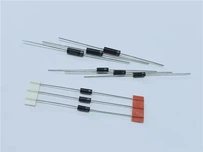
Product Detail
- Package: TO-247.
- Current class: high-current.
- Options: single and dual.
- Use case: heat-sinked assemblies.
Product Description
This TO-247 Power Schottky page is for larger converters, battery systems and industrial assemblies where the diode must move real heat into a heat sink. You can compare single and dual TO-247 Schottky selections by current rating, reverse voltage, forward drop, tab connection, insulation requirement, screw mounting and thermal resistance. At this power level, the drawing and hardware matter as much as the electrical line items. Lian Tuo helps you prepare samples that fit the assembly your operators will actually build. That keeps the recommendation close to the real metalwork.
Our TO-247 Power Schottky Options
| Single TO-247 Power Schottky | Single-diode option for high-current rectifier or blocking paths with direct heat-sink contact. |
| Dual TO-247 Power Schottky | Paired configuration for converter outputs where current path and thermal balance need review. |
| High Current TO-247 Schottky | Selection group for demanding DC outputs, battery paths and industrial power sections. |
| Insulated TO-247 Schottky | Project direction when tab isolation and thermal transfer must be solved together. |
| TO-247 Schottky Equivalent | Replacement support for obsolete or tight-supply power Schottky parts in fixed assemblies. |
Feature Box
- Large PackageTO-247 gives stronger mechanical and thermal headroom.
- Power CurrentSuitable for heavy DC paths and converter outputs.
- Hardware ReviewScrews, clips, insulation and tab contact are checked.
- Assembly FitDrawings and height limits are compared before samples.
Treat Hardware As Electrical
A TO-247 Power Schottky is selected with the heat sink, screw, clip and insulation stack in mind. Poor contact raises junction temperature no matter how strong the datasheet looks. Share the mechanical layout so the diode recommendation fits the actual assembly. It also gives purchasing fewer risky alternates to screen later.
Check Current Balance
High-current systems may use single devices, parallel paths or dual-diode packages. Current balance depends on layout symmetry, heat spreading and connection resistance. The TO-247 Power Schottky choice should be reviewed with the busbar, cable or PCB copper path. That keeps the recommendation close to the real metalwork. It also gives purchasing fewer risky alternates to screen later.
Avoid Package Surprises
TO-247 parts can differ in pin spacing, body thickness, tab connection and insulation approach. A close electrical match can still be awkward for production. Lian Tuo can compare drawings before your team buys TO-247 Power Schottky samples in volume. It also gives purchasing fewer risky alternates to screen later. That keeps the recommendation close to the real metalwork.
Plan Long-Term Supply
Power assemblies often stay in production for years, so backup sourcing matters. The approved TO-247 Power Schottky list should include realistic alternates that match rating, package and hardware. This gives purchasing room to move without forcing engineering into a late redesign. That keeps the recommendation close to the real metalwork.
Vertical Product Applications
Industrial DC Supplies
Use a TO-247 Power Schottky in industrial DC supplies when output current and enclosure heat demand a larger package. The diode should be checked with heat-sink size, mounting pressure and voltage margin before sample approval. It also gives purchasing fewer risky alternates to screen later. That keeps the recommendation close to the real metalwork.
Battery Power Systems
Battery power systems need Schottky parts that handle high current, possible fault stress and service access. A TO-247 Power Schottky can support ORing or blocking paths when the hardware allows proper cooling. That keeps the recommendation close to the real metalwork. It also gives purchasing fewer risky alternates to screen later.
High-Current Converters
High-current converters need diode packages that do not become the thermal bottleneck. A TO-247 Power Schottky gives more mechanical room for heat transfer, but pinout and insulation must be confirmed before the BOM is released. It also gives purchasing fewer risky alternates to screen later. That keeps the recommendation close to the real metalwork.
FAQ
When should I choose TO-247 Power Schottky?
Choose it when current, heat and mechanical mounting exceed what smaller packages can handle. TO-247 is useful for heat-sinked converters, battery systems and industrial power assemblies where hardware control is important. It also gives purchasing fewer risky alternates to screen later.
Is TO-247 always better than TO-220?
Not always. TO-247 offers more thermal and mechanical room, but it uses more space and may cost more. If a TO-220 package already runs cool enough, moving larger may not improve the design. That keeps the recommendation close to the real metalwork.
What should I check before replacing TO-247 parts?
Check voltage, current, pinout, tab connection, body size, mounting hole, insulation and thermal resistance. A replacement must fit the existing assembly, not only match the first two ratings. It also gives purchasing fewer risky alternates to screen later. That keeps the recommendation close to the real metalwork.
Can TO-247 Schottky parts be paralleled?
Sometimes, but current sharing must be reviewed carefully. Layout, heat sink contact and connection resistance affect balance. Do not parallel power diodes without checking the actual circuit and thermal conditions. That keeps the recommendation close to the real metalwork. It also gives purchasing fewer risky alternates to screen later.
What data helps quote TO-247 Power Schottky parts?
Send current, voltage, target model, package drawing, heat-sink method, insulation need, application and quantity. Photos of the mounting area are useful when replacing an older assembly. It also gives purchasing fewer risky alternates to screen later. That keeps the recommendation close to the real metalwork.
Can Lian Tuo help find TO-247 equivalents?
Yes. We can compare single and dual TO-247 Power Schottky options by electrical rating, drawing, tab style, thermal path and availability before recommending samples for your project. That keeps the recommendation close to the real metalwork. It also gives purchasing fewer risky alternates to screen later.
Why does insulation affect diode choice?
The tab may be electrically active, so insulation can be required for safety or circuit reasons. Insulation also changes thermal resistance. The diode, pad, screw and heat sink should be reviewed as one system. It also gives purchasing fewer risky alternates to screen later.
Internal Product Links
TO-220 Schottky Diode High Current Schottky Diode Ultra High Power Bridge Rectifier